Easy ideas for turning a pumpkin into a favorite book character without turning it into the parents’ school project.
The assignment comes home….Turn a pumpkin into your favorite book character.
Your child is excited. You have visions of paint, felt, googly eyes, and a wholesome afternoon of family creativity.
But fast-forward 48 hours.
You’re holding a hot glue gun at 9:14 p.m., trying to engineer Pete the Cat’s ears while your child is in the other room asking for a snack.
Things have gone terribly wrong.
But book-character pumpkin projects can be a fantastic way for kids to combine reading, creativity, and problem-solving.
But there’s a catch.
We have to leave enough of the project for the kid to actually “do.“
And that’s harder than it sounds.
We know how to make the ears stay on. We can cut the perfect circles. We know that paint probably won’t stick to that surface.
And when our child’s idea isn’t quite working, it’s very tempting to swoop in with:
“Here, let me show you.”
Suddenly we’re making the pumpkin while our child watches.
So this year, before you search Pinterest for the perfect book character pumpkin to recreate, try something different.
Let your child’s ideas lead.
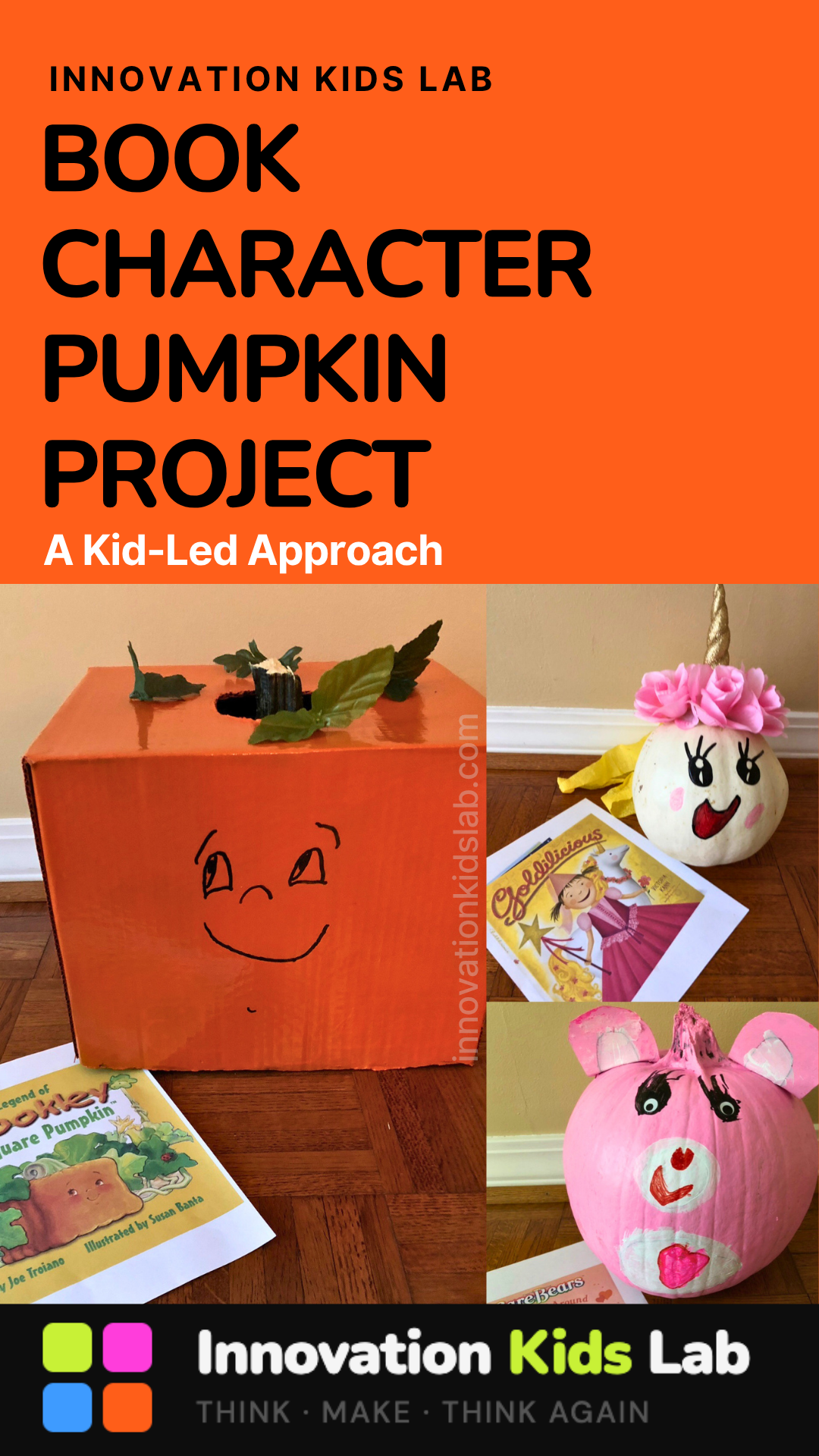
Start With the Book, Not Pinterest
Pinterest can be great for inspiration.
But if the first thing your child sees is someone else’s perfectly finished Charlotte’s Web pumpkin, it’s hard to unsee it.
The creative question changes from:
“How could I turn this pumpkin into Charlotte?”
to:
“How do I make my pumpkin look like that one?”
Instead, start with books your child already knows and loves.
Pull a few favorites from the bookshelf or library and flip through them together.
Ask:
Which character would be fun to turn into a pumpkin?
Don’t worry yet about whether the character will be easy to make.
Let them wonder first.
A child might choose Pete the Cat, The Very Hungry Caterpillar, Paddington, the Rainbow Fish, a Wild Thing, or a character you would never have considered.
That’s good.
The goal isn’t choosing the pumpkin that’s easiest for the adult to execute.
It’s helping your child begin with their idea.
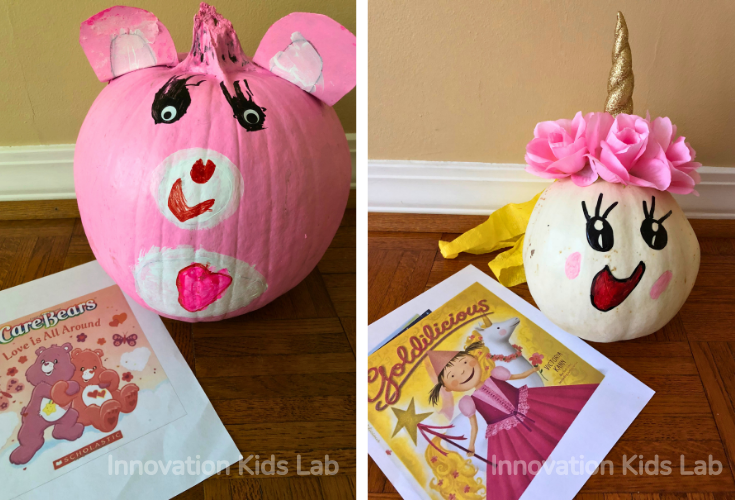
WONDER: What Makes the Character Recognizable?
Once your child has chosen a character, spend a little time looking closely.
Ask:
What do you notice about this character?
Maybe it’s Pete the Cat’s blue fur and big yellow eyes.
Maybe it’s the Cat in the Hat’s enormous red-and-white striped hat.
Maybe it’s the Rainbow Fish’s shiny scales.
Maybe it’s Paddington’s red hat and blue coat.
You can ask:
“If someone saw your pumpkin without seeing the book, what would help them know who it is?”
Now your child isn’t simply making a craft.
They’re observing.
Comparing.
Identifying important details.
Making decisions about which parts matter.
That’s creative thinking before you’ve opened a single bottle of glue.
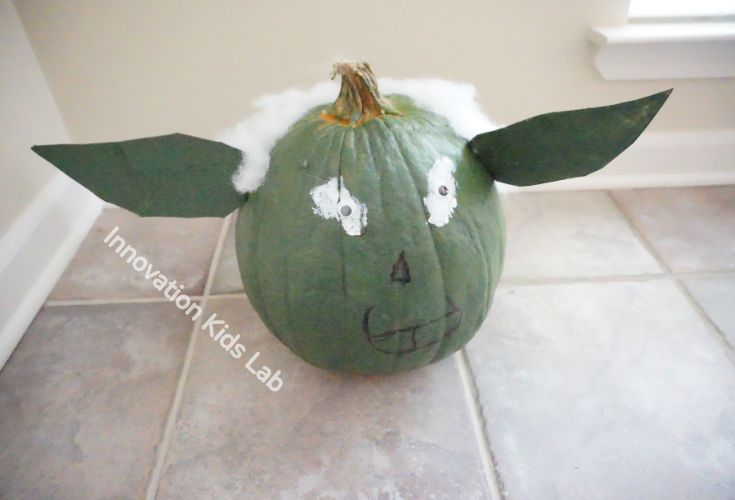
CHOOSE: Hunt for Materials Before You Buy Them
Here’s where I would resist the urge to make a detailed craft-store shopping list.
Instead, go on a materials hunt around your house.
What do you already have?
Put some possibilities on the table:
Paper, cardboard, yarn, fabric scraps, paint, markers, pipe cleaners, foil, buttons, tissue paper, old magazines, craft sticks, pom-poms, recyclables, leaves, twigs, or whatever else you find.
Then ask:
“What could we use to make the hat?”
“What could become the ears?”
“How could you make the scales shiny?”
“What could we use for hair?”
This is one of my favorite parts because a cardboard box stops being a cardboard box.
- It’s a hat.
- An ear.
- A crown.
- A pair of glasses.
- A nose.
Maybe your child has an idea that makes absolutely no practical sense.
Let them explore it for a minute anyway.
They might surprise you.
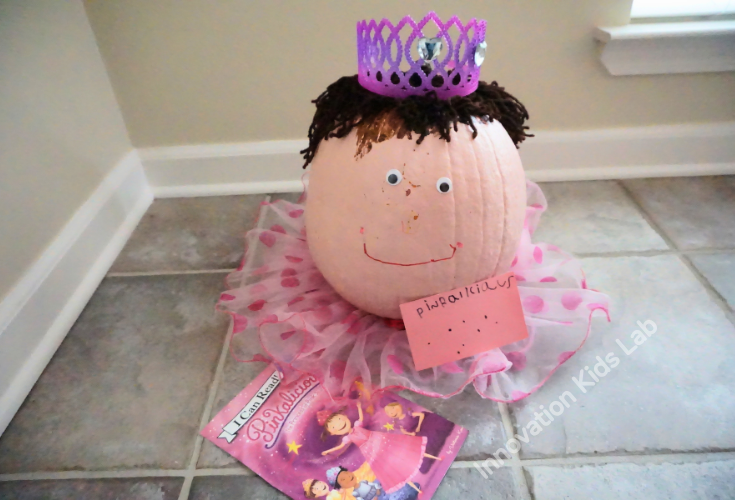
TRY: Let the First Idea Not Work
This is the part adults are really good at accidentally stealing.
Your child announces that two giant pieces of construction paper will make perfect ears.
You know those ears are going to flop over approximately three seconds after they’re attached.
You could explain this immediately.
Or…
you could let them try.
The ears flop.
Now there’s a problem.
And instead of fixing it, you can say:
“Hmm. What could you try?”
Maybe they use cardboard.
Maybe they fold the paper.
Maybe they add a craft stick behind it.
Maybe they come up with a solution neither of us would have thought of.
That little moment matters.
Because creativity isn’t just coming up with cute ideas.
It’s also:
I tried something.
It didn’t work.
I can try something else.
When we immediately solve every problem for kids, we make the project easier.
But we also remove some of the most valuable parts of the project.
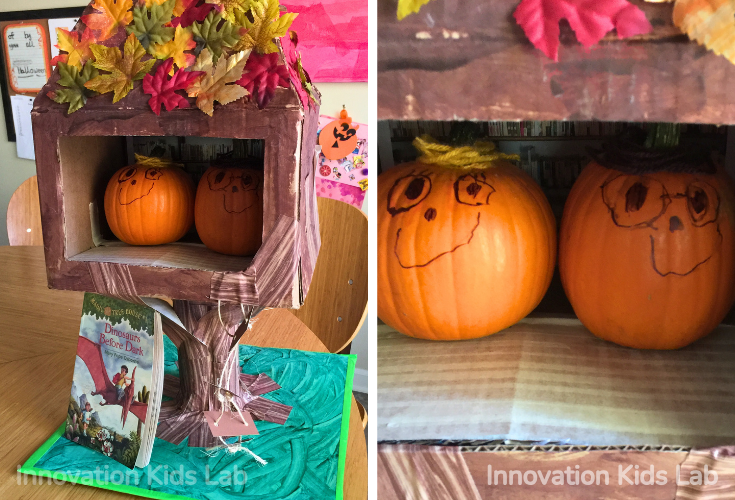
STRETCH: Help Without Taking Over
Kid-led doesn’t mean adults can’t help.
Sometimes kids genuinely need an extra pair of hands.
There may also be tools or materials that require adult supervision.
The question I like to ask is:
Am I helping my child carry out their idea or replacing their idea with mine?
There’s a big difference.
If your child decides exactly where something needs to go but needs you to operate the hot glue gun, that’s still their creative decision.
Their idea. Your hands.
If your child is struggling with something, instead of immediately doing it for them, you might ask:
“What part do you want help with?”
That gives them some ownership over the help, too.
And sometimes the best help is simply sitting nearby while they figure it out.
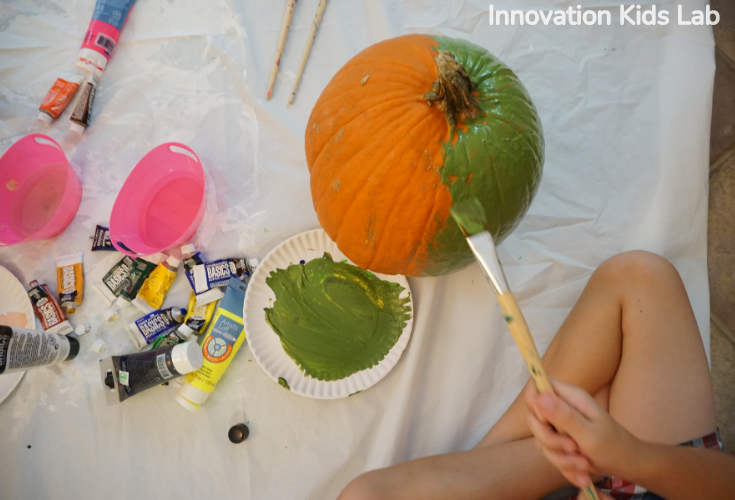
Don’t Worry If It Doesn’t Look Like Pinterest
Your child’s book character pumpkin might be lopsided.
The eyes might not match.
The paint may be patchy.
The cardboard crown might lean suspiciously to the left.
Excellent.
A perfectly polished pumpkin doesn’t tell us how much creativity happened.
A child could follow an adult’s instructions exactly and end up with something beautiful.
Another child could create something wonderfully strange, encounter six problems, change the plan three times, invent a solution, and end up with something that would never survive a Pinterest algorithm.
Which child had the richer creative experience?
That’s why I care more about the process than whether the finished pumpkin looks impressive.
The goal isn’t a better pumpkin.
It’s a child who gets another opportunity to think:
- I can have an idea.
- I can make a choice.
- I can try something.
- I can figure things out.
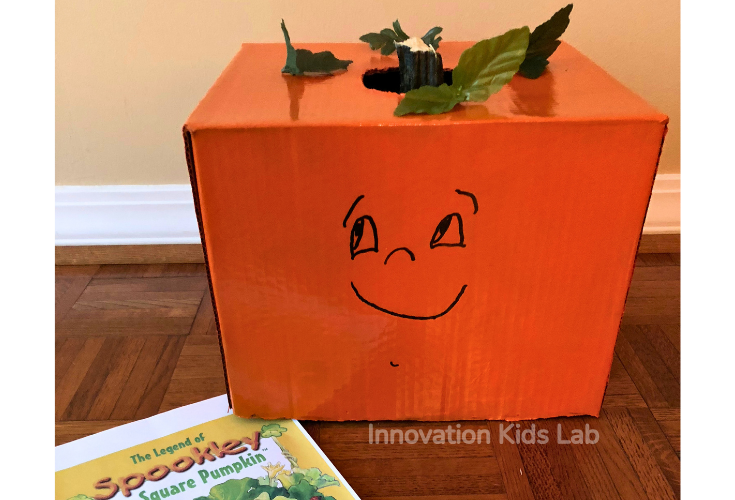
Book Character Pumpkin Ideas to Get Them Thinking
If your child is having trouble choosing a character, you can offer possibilities without showing them exactly how the finished pumpkin should look.
Try characters with a few recognizable features:
Pete the Cat — What makes Pete look like Pete? How could you create his eyes, ears, or whiskers?
The Cat in the Hat — What could you use to make that very tall striped hat?
The Very Hungry Caterpillar — How could a pumpkin represent a character that isn’t pumpkin-shaped?
The Rainbow Fish — What materials could become colorful or shiny scales?
Where the Wild Things Are — What could become horns, fur, teeth, or a crown?
Paddington — How could you represent his recognizable hat and coat?
Piggie and Gerald — What simple features would help someone recognize which character you’ve chosen?
And don’t overlook the weird choice your child comes up with.
Sometimes the character that makes you think, How on earth are we going to turn a pumpkin into THAT? is exactly the one that creates the most interesting problem-solving.
Before You Make the Pumpkin, Let Them Plan It
You don’t need a detailed blueprint.
But giving kids a little space to think before the supplies come out can help keep the project theirs.
Have them consider:
My character: Who am I making?
What I notice: What are the most recognizable things about this character?
My idea: What might my pumpkin look like?
Materials: What could I use?
The tricky part: What am I not sure how to make yet?
Then give them space to sketch, scribble, write, or plan their idea.
It doesn’t have to look anything like the finished pumpkin.
Planning is just another place to wonder.
Your Job Isn’t to Make the Pumpkin
Your job is to create enough support for your child to keep going.
Wonder with them.
Let them choose.
Give them room to try.
Help when they’re genuinely stretched beyond what they can do alone.
And when you’re standing there holding a hot glue gun while your child tells you exactly where their crooked cardboard ear belongs?
Resist the urge to straighten it.
Glue the crooked ear exactly where they told you.
It’s their pumpkin.
And that’s the point.
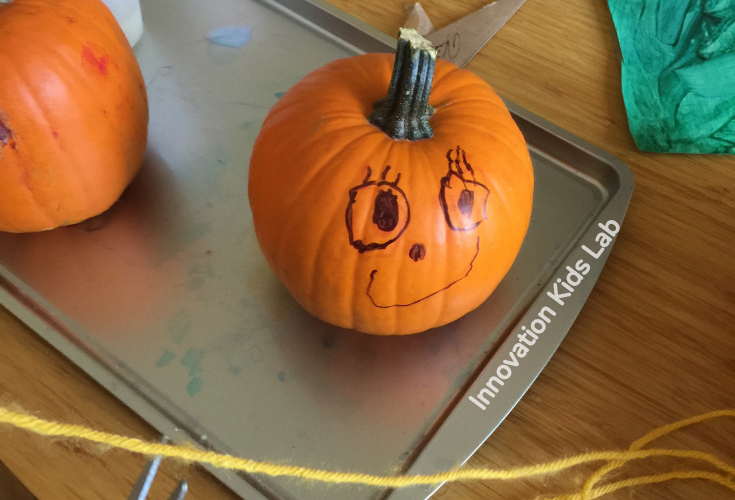
A Little Challenge for the Grown-Ups
When the book character pumpkin assignment comes home this year, try starting with one rule for yourself:
Don’t show your child a finished example until they’ve had a chance to come up with their own idea.
Start with the book.
Ask questions.
Gather materials.
Then see what they come up with.
The finished pumpkin may not look like anything you would have made.
Good.
That means there was room for your child in it.


Leave a Reply